
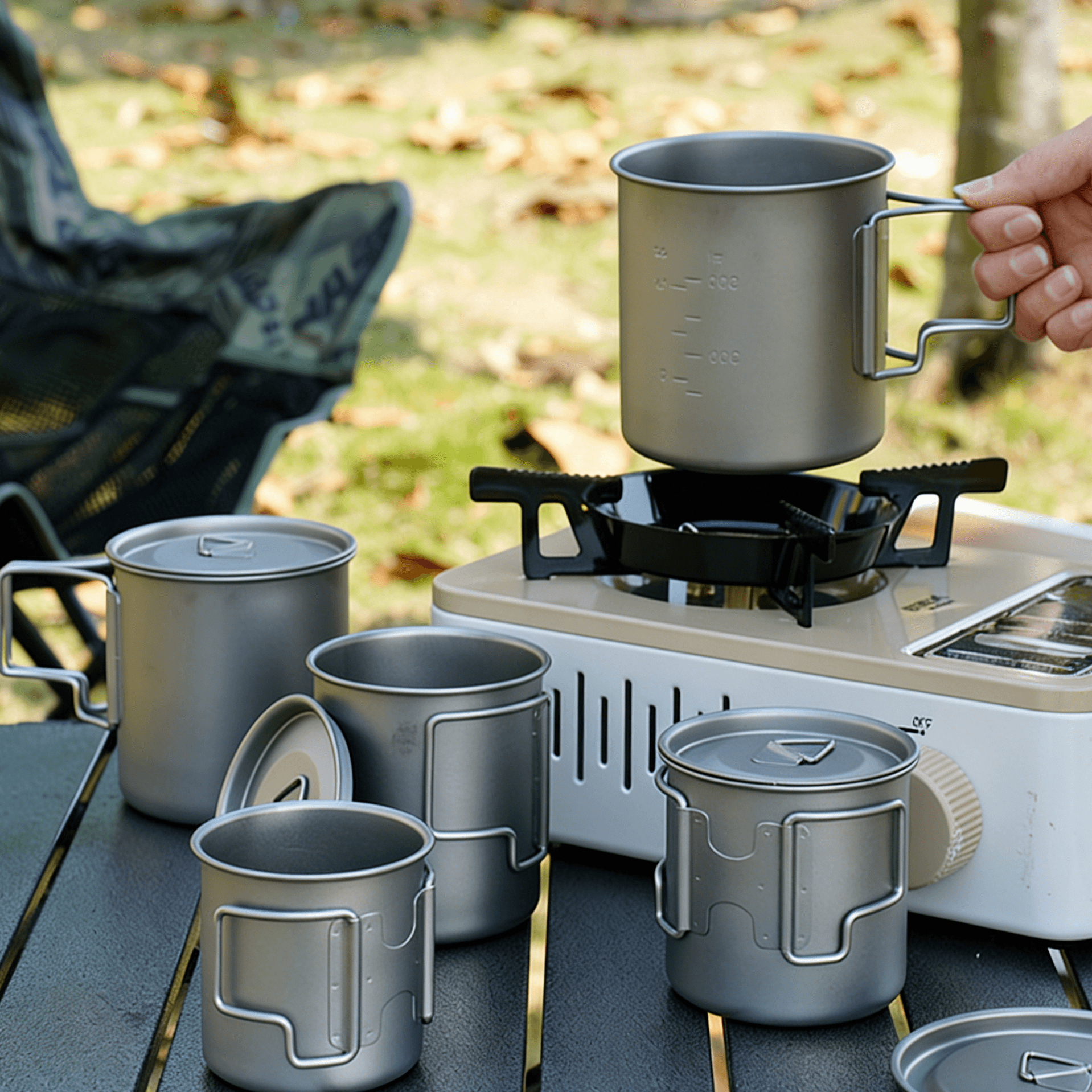
The “Trial by Fire”: Post-Trip Cleaning
One of the most satisfying parts of achieving peace through better gear is knowing that cleanup doesn’t have to be a chore. Unlike cast iron or aluminum, titanium is naturally resistant to corrosion and acid. However, wood smoke and grease can leave a stubborn film that needs attention.
For most trips, a simple rinse with biodegradable soap and a soft sponge will do the trick. If you’ve been using a portable wood stove, you likely have some soot buildup. Pro tip: Don’t scrub the soot off until you get home. On the trail, that layer of carbon actually helps heat transfer, but back at the house, it’s time to restore that signature matte finish.
Cleaning Methods: A Quick Reference
Choosing the right tool for the job prevents unnecessary scratches. While titanium is hard, it can still be scratched by aggressive abrasives. Use the table below to guide your cleaning routine.
| Mess Level | Cleaning Agent | Recommended Tool | Safe for Titanium? |
|---|---|---|---|
| Light (Coffee/Tea) | Warm Water | Soft Cloth | Yes (Best) |
| Medium (Food residue) | Mild Dish Soap | Non-scratch sponge | Yes |
| Heavy (Burned food) | Baking Soda Paste | Soft Brush | Yes |
| Stubborn Soot/Tar | White Vinegar | Scouring Pad | Use with caution |
Restoring the Luster: Dealing with Discoloration
Titanium gear often develops a beautiful, iridescent blue or rainbow hue after being exposed to high heat. This is a natural oxidation process, and many hikers wear it like a badge of honor. It shows you’ve mastered your solo bushcraft adventures.
If you prefer the original gray look, a soak in a 1:1 mixture of white vinegar and water for 30 minutes will usually lift the oxidation. For mineral buildup (white spots) from hard water, a simple lemon juice scrub works wonders. Keeping your gear clean is essential, but so is organizing your gear for good so you can find it when the next window of good weather opens up.
Solving the Sticking Problem
Titanium doesn’t have a non-stick coating like your pans at home. That’s a good thing—it means no toxic chemicals flaking into your food. But it does mean you need a bit of technique. If you do end up with scorched food, don’t use a metal scraper! Fill the pot with water, add a spoonful of baking soda, and bring it to a boil. The food will lift right off.
This attention to detail is part of eliminating pre-trip stress. When you know your gear is clean and ready, you can focus on the destination.
Storage Tips for the Off-Season
The most common damage to gear doesn’t happen on the mountain; it happens in the garage. Moisture is the enemy of all premium camping gear. Before you pack your titanium away, make sure it is 100% bone-dry.
- Air Dry: Leave your pots open to air for 24 hours before nesting them.
- Nesting Protection: If you use a nesting set, place a small microfiber cloth between the layers to prevent rattling and scratches during transport.
- Handle Care: If your mug has collapsible handles, ensure the joints are free of grit. A tiny drop of food-grade mineral oil can keep the mechanism smooth.
Frequently Asked Questions
Q: Is titanium dishwasher safe?
A: Technically, yes. Titanium won’t be harmed by a dishwasher. However, harsh detergents can dull the finish over time. For the longest life, we recommend hand washing.
Q: Can I use steel wool on my titanium pot?
A: It’s best to avoid it. Steel wool is harder than titanium and will leave visible scratches. A non-scratch nylon scouring pad is a much safer alternative.
Q: My titanium mug has white spots. Is it ruined?
A: Not at all! Those are just mineral deposits from hard water. Wipe them away with a bit of lemon juice or vinegar, and your mug will look brand new.
Q: Why did my pot turn blue after the first use?
A: That is the “Titanium Bloom.” It’s a layer of oxidation caused by heat. It’s completely safe, doesn’t affect the taste, and is a sign of a high-purity metal.
Your Gear, Your Legacy
At 10Best Camping, we believe in building your legacy in the great outdoors. High-quality titanium isn’t a disposable purchase; it’s a companion for life. When you take the time to maintain your equipment, you’re not just cleaning a pot—you’re preparing for the next story you’ll tell around the campfire.
Before you head out on your next seamless serene escape, give your gear the check-up it deserves. It’s a small investment that leads to a lifetime of reliability.
Beyond Maintenance: Why Titanium?
Keeping your gear clean is only half the battle. To truly master the ultralight lifestyle, you need to know the science behind the metal. Discover why we swear by this material in our pillar guide:
Why Titanium is the Best Choice for Ultralight Backpackers.